Landlord Buildings Insurance UK — Specialist Cover for Your Rental Property
Landlord buildings insurance covers the cost of repairing or rebuilding the structure of your rental property if it is damaged by an insured event — including fire, flood, storm, subsidence, escape of water, or malicious damage by tenants. At Abcord, we provide specialist landlord buildings insurance for residential rental properties across the United Kingdom.
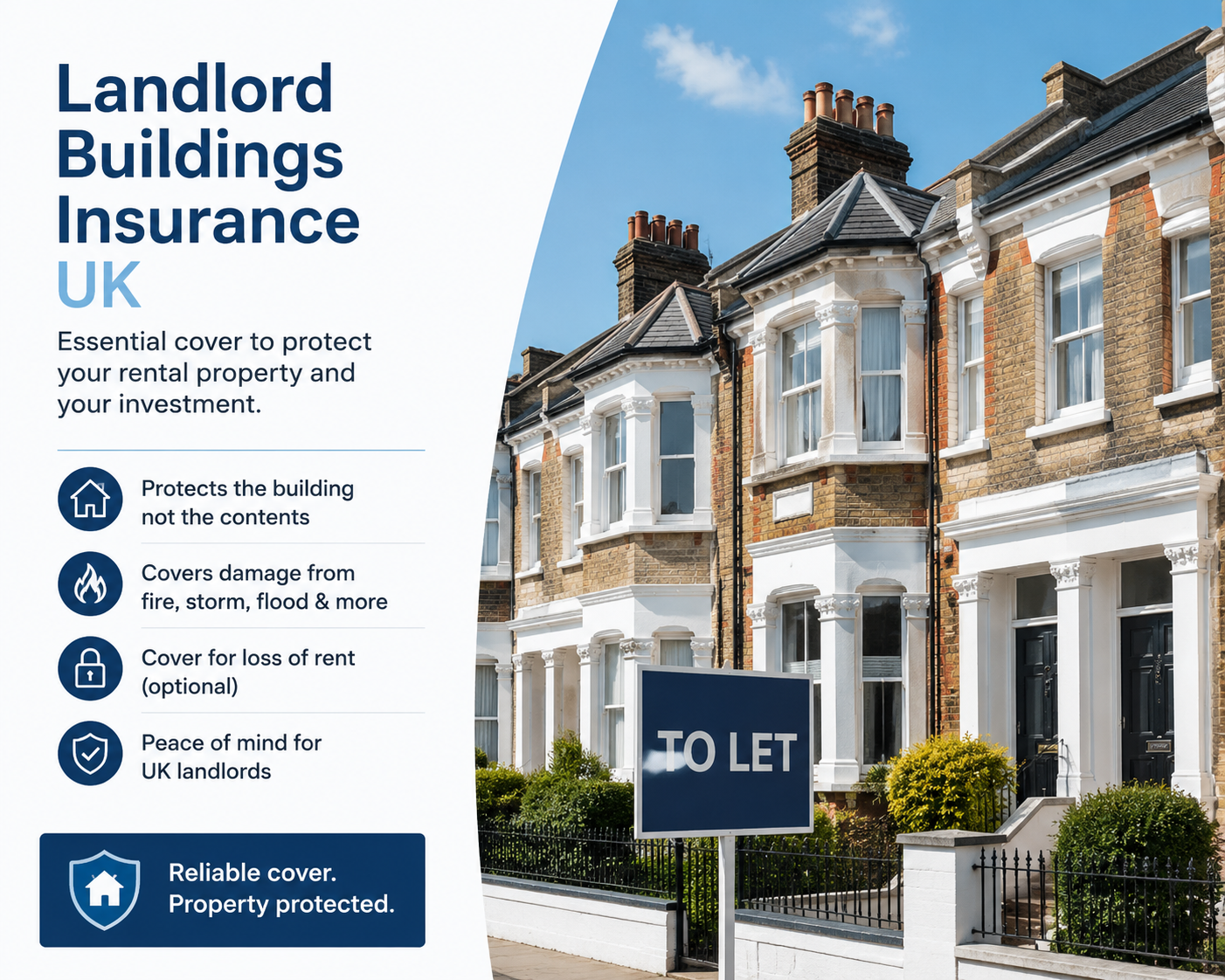
Unlike standard home buildings insurance — which is designed for owner-occupiers — landlord buildings insurance accounts for the specific risks that come with having tenants in your property, including periods of vacancy between tenancies and the possibility of deliberate or accidental damage.
Buy-to-Let Mortgage Requirement
If you have a buy-to-let mortgage, your lender will almost certainly require you to maintain appropriate landlord buildings insurance as a condition of the mortgage. Failing to do so could put your mortgage in technical default. Abcord provides the specialist cover that buy-to-let mortgage lenders require.
What Does Landlord Buildings Insurance Cover?
A comprehensive landlord buildings insurance policy from Abcord covers the following:
Full structural cover
Walls, roof, floors, foundations, load-bearing elements and ceilings
Permanent fixtures and fittings
Fitted kitchen units, bathroom suite, built-in wardrobes
Fire and smoke damage
Full structural damage protection from fire and smoke
Storm and weather damage
Storm, flood and extreme weather damage to the structure
Escape of water
Burst pipes, leaking appliances and resulting water damage to the structure
Subsidence protection
Subsidence, heave and landslip coverage
Malicious damage cover
Deliberate damage by tenants or third parties
Theft damage protection
Structural damage caused by forced entry
Impact damage
Vehicles, falling trees, falling aerials or satellite dishes
Loss of rent protection
If the property cannot be lived in following an insured event
Property owner liability
If a tenant, visitor or member of the public is injured at your property
Emergency assistance
24/7 access to emergency repairs for urgent situations
What is NOT Covered by Landlord Buildings Insurance?
Understanding exclusions is just as important as understanding cover. Standard landlord buildings insurance does not cover:

- General wear and tear — buildings insurance is not a maintenance product
- Damage caused by vermin or pests
- Gradual deterioration — damage that develops slowly over time rather than from a sudden event
- Tenant contents — tenants are responsible for insuring their own belongings
- Damage arising from failure to maintain the property — maintenance-related damage may be excluded
- Properties left unoccupied beyond the policy vacancy limit without specialist cover
Property Types Covered by Abcord Landlord Buildings Insurance
| Property Type | Notes |
|---|---|
| Single let houses | Terraced, semi-detached and detached houses let to tenants on standard ASTs |
| Purpose-built flats | Flats in purpose-built blocks — whether leasehold or freehold |
| Converted houses and flats | Houses converted into two or more self-contained flats |
| HMO properties | Houses in Multiple Occupation with shared facilities and common areas |
| Student properties | Properties let specifically to student tenants |
| DSS and benefit tenant properties | Properties let to tenants on Universal Credit or housing benefit |
| Holiday lets | Residential properties used for short-term holiday rental |
| Portfolio properties | Multiple properties under one policy — often more cost-effective |
| Non-standard construction | Flat roofs, timber frame, thatched — speak to us to discuss your property |
Rebuild Value vs Market Value — A Critical Distinction

One of the most expensive mistakes a landlord can make when arranging buildings insurance is using the wrong figure for the sum insured. Buildings insurance must be based on the rebuild value of the property — not the market value.
Market Value vs Rebuild Value — What is the Difference?
- Market Value: What the property would sell for on the open market, including the land value.
- Rebuild Value: What it would cost to completely demolish the property and rebuild it from scratch, NOT including the land. This is almost always significantly lower than the market value.
Why it matters:
- Insuring for the market value means you are overpaying on premiums.
- Insuring for less than the rebuild value means you are underinsured — and at claim time, the insurer can apply 'average' and pay out only a proportion of your claim.
- Recommended tool: Use the free BCIS Rebuild Cost Calculator at bcis.co.uk or commission a professional reinstatement valuation from a RICS-registered surveyor.
Landlord Buildings Insurance Across the Whole of the UK
Abcord provides landlord buildings insurance for properties in every part of the United Kingdom:
- England — all regions including London, South East, South West, Midlands, North West, North East and Yorkshire
- Scotland — including Glasgow, Edinburgh, Aberdeen, Inverness and rural Scottish properties
- Wales — including Cardiff, Swansea, Newport and rural Welsh properties
- Northern Ireland — including Belfast, Derry and surrounding regions
Frequently Asked Questions — Landlord Buildings Insurance UK
A: There is no law in the UK that specifically requires landlords to hold buildings insurance. However, if you have a buy-to-let mortgage, your mortgage lender will almost certainly require it as a condition of the loan. Even without a mortgage, going without buildings insurance is a significant financial risk — a single uninsured claim for fire or flood damage could cost tens or hundreds of thousands of pounds to repair or rebuild.
A: Standard home buildings insurance is designed for owner-occupiers who live in the property they are insuring. It typically includes a clause that restricts or removes cover if the property is rented out to tenants. Landlord buildings insurance is designed specifically for rented properties — it includes cover for tenant-related risks such as malicious damage and loss of rent, which standard home insurance excludes.
A: Most standard landlord buildings insurance policies include a vacancy clause — typically allowing 30 to 90 days of unoccupancy before cover changes. If your property is likely to be empty for longer than this — for example, during an extended refurbishment or a prolonged search for tenants — you should arrange specialist unoccupied property insurance. Abcord can help you switch seamlessly between landlord and unoccupied cover.
A: Malicious damage by tenants — deliberate damage to the structure of the property — is typically covered by landlord buildings insurance. Accidental damage by tenants to the structure may be included as standard or may need to be added as an optional extra, depending on the policy. Contact Abcord to confirm what is included in your specific policy.
A: Yes. Abcord offers portfolio landlord buildings insurance that can cover multiple rental properties under a single policy. This is often more cost-effective than arranging separate policies for each property and simplifies administration at renewal time.
A: The cost of landlord buildings insurance depends on the rebuild value of the property, its location and postcode, the construction type, the type of tenants in the property, your claims history, and the level of cover and excess you choose. Abcord works with specialist insurers to find competitive premiums across all property types — contact us for a personalised quote.
Get Your Landlord Buildings Insurance Quote Today
Call Abcord on 01923 911 202 or use the Get a Quote button below. We cover properties across England, Scotland, Wales and Northern Ireland.